Materials
Materials that suit the mood—and the maintenance.
How materials behave, age and are cared for. General guidance only — performance figures always come from manufacturer data.
Try it in the demonstration room
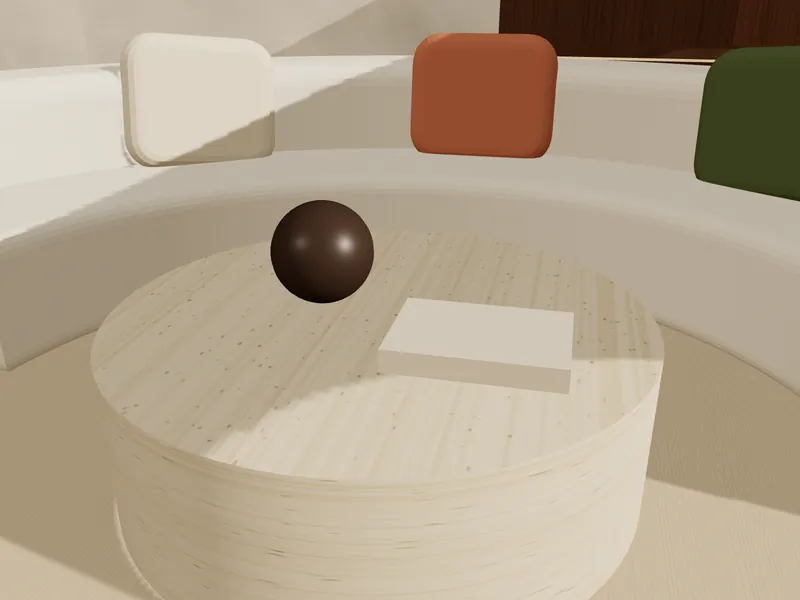
Material demonstration: travertine, bouclé, walnut and olive velvet in the studio demonstration room. Concept visualisation.
Material library
Timber
Warmth you can touch.
Read the notes
- Where it works
- Floors, joinery, tabletops, wall panelling. Solid wood for pieces that may be refinished; veneer for large, stable panels.
- Care
- Wipe spills quickly; avoid standing water. Oiled finishes need periodic re-oiling; lacquered finishes resist stains but are harder to spot-repair.
- Longevity
- Ages well and can often be sanded back. Expands and contracts with humidity, so species and seasoning matter.
- Trade-offs
- Softer species dent. Very wide boards look beautiful and move more.
Stone
Weight, cool to the hand.
Read the notes
- Where it works
- Kitchen counters, vanities, flooring, feature surfaces. Granite and quartzite for hard-working counters; marble and travertine where patina is welcome.
- Care
- Seal porous stones and reseal on the supplier’s schedule. Acidic spills can etch marble.
- Longevity
- Very long-lived when supported and sealed properly. Chips can often be repaired by a stone specialist.
- Trade-offs
- Natural variation means samples never match exactly — approve the actual slab where possible.
Metal
The precise line.
Read the notes
- Where it works
- Handles, frames, light fittings, trims, furniture bases. Brass and bronze for warmth; powder-coated steel for colour.
- Care
- Unlacquered brass darkens and spots; lacquered finishes keep their look until the lacquer wears.
- Longevity
- Structural metals are durable; finishes are the weak point. Coastal and humid air speed up corrosion.
- Trade-offs
- Mixing too many metal tones reads busy. Choose one lead finish and one support.
Fabric & upholstery
Comfort, then character.
Read the notes
- Where it works
- Sofas, dining chairs, headboards, cushions. Tight weaves for daily use; bouclé and velvet for texture.
- Care
- Look for removable covers in homes with children or pets. Test cleaning codes on a sample first.
- Longevity
- Supplier abrasion ratings indicate wear resistance; frame and foam quality decide how long the shape holds.
- Trade-offs
- Loop textures can snag on claws; pale colours show wear sooner.
Glass
Light that keeps its distance.
Read the notes
- Where it works
- Partitions, shower screens, shelving, cabinet doors. Clear for openness; reeded or frosted for privacy.
- Care
- Shows fingerprints and water marks; textured glass hides them better.
- Longevity
- Safety glass type and thickness are specified per use by the supplier and installer.
- Trade-offs
- Glass partitions let light through but isolate sound less well than solid walls.
Paint & wall finishes
The largest surface in most rooms.
Read the notes
- Where it works
- Walls and ceilings. Matt for calm, eggshell where walls get touched, lime or textured finishes for depth.
- Care
- Washability varies by finish; ask for the manufacturer’s scrub-resistance rating for busy areas.
- Longevity
- Repainting is the easiest change in any interior; textured finishes are harder to patch invisibly.
- Trade-offs
- Deep colours need more coats and careful lighting; sample on the actual wall.
Laminates
Practical, consistent, affordable.
Read the notes
- Where it works
- Wardrobe and kitchen shutters, office furniture, some high-use worktops.
- Care
- Wipe-clean; avoid abrasive pads on high-gloss finishes.
- Longevity
- Durability depends on grade and edge banding quality; edges are the weak point.
- Trade-offs
- Very consistent patterns can read flat beside real timber or stone.
Veneers
Real wood, stable panels.
Read the notes
- Where it works
- Wall panelling, wardrobes, doors and furniture where solid wood would move too much.
- Care
- Treat like timber: avoid standing water and strong sun; refinishing is limited by veneer thickness.
- Longevity
- Long-lived when edges are protected and the substrate suits the humidity.
- Trade-offs
- Natural variation between leaves; approve sample sheets for important areas.
Tiles
Pattern, protection and water resistance.
Read the notes
- Where it works
- Bathrooms, kitchens, balconies and floors. Large formats for fewer joints; handmade tiles for character.
- Care
- Grout colour and type decide how clean a floor looks; epoxy grouts resist stains better.
- Longevity
- Very durable; slip resistance ratings matter for wet floors — check the manufacturer’s data.
- Trade-offs
- Large formats need very flat substrates and skilled laying.
Light
The material that changes all the others.
Read the notes
- Where it works
- Ambient light to see, task light to work, accent light to notice. Dimming lets one room do several jobs.
- Care
- Choose fittings you can relamp easily; keep spare lamps of the same colour temperature.
- Longevity
- LED sources last long; drivers and fittings vary. Warmer white suits most homes.
- Trade-offs
- High colour rendering shows materials truthfully but can cost more. Electrical work is always by a licensed electrician.
Explore the material direction
Tell us about the space and how it will be used.